Practical guides for high-stakes business decisions before launch, spend, or rollout.

This section is for product leaders, growth teams, founders, and operators who need a clear answer to a risky decision question, not another AI landing page. Each article is written around a concrete workflow problem and stays grounded in the Nockora capabilities verified in the current codebase.

Editorial promise

  • Every guide starts from a real business decision question, not generic AI positioning copy.
  • Every post stays inside the product surface verified in the current codebase.
  • Articles are structured for search engines, answer engines, and decision-makers scanning for a fast answer.

Foundations

3 guides

Definitions, category context, and answer-first primers for teams evaluating decision simulation.

Before Rollout

6 guides

Hands-on guidance for pricing changes, product launches, and scenario comparison before a team commits.

Decision Operations

4 guides

Decision logging, forecast review, and calibration guidance for what happens after the simulation.

Start with the category overview.

Illustration of a product team reviewing feature risks, customer reactions, and decision output before launch.
Before RolloutProblem-aware / Informational
Feature StrategyApril 21, 20269 min readNockora Team

How to Predict if a New Feature Will Succeed Before Launch

Teams usually ask whether a feature will succeed when they are already emotionally attached to shipping it. A better approach is to turn the question into a decision workflow: define the feature decision, identify who could reject it, inspect likely upside and downside, and write the memo before engineering time is fully committed.

Focus: how to predict if a new feature will succeed before launch

Feature launchDecision workflowRisk review
Read guide
Start with the mental model.

Illustration of an AI-assisted decision workflow moving from business question to risk map and memo.
FoundationsSolution-aware / Informational
Decision IntelligenceApril 21, 20268 min readNockora Team

How to Evaluate a Business Decision With AI Before Committing Budget

AI is useful for evaluating a business decision only when it improves the workflow, not when it produces more fluent opinions. A serious process frames the decision, pressure-tests likely reactions, reviews risk and impact, and creates a memo before the budget is locked.

Focus: evaluate a business decision with AI before committing budget

Budget decisionsAI workflowDecision memo
Read guide
Illustration comparing generic chatbot output with a structured business decision workflow.
FoundationsComparison / Solution-aware
AI Decision WorkflowApril 21, 20268 min readNockora Team

Why ChatGPT Is Not Enough for High-Stakes Business Decisions

ChatGPT is useful for brainstorming, synthesis, and drafting. The problem is that high-stakes business decisions need more than fluent output. They need structure: a repeatable workflow, segment reactions, risk framing, memo output, comparison, and project decision context. That is the gap a decision intelligence product is trying to close.

Focus: why ChatGPT is not enough for high-stakes business decisions

ChatGPT comparisonDecision workflowSaaS positioning
Read guide
Illustration showing a decision workflow moving from evidence to scenarios, simulation, report, and calibration.
FoundationsSolution-aware / Informational
Decision SimulationApril 13, 202611 min readNockora Team

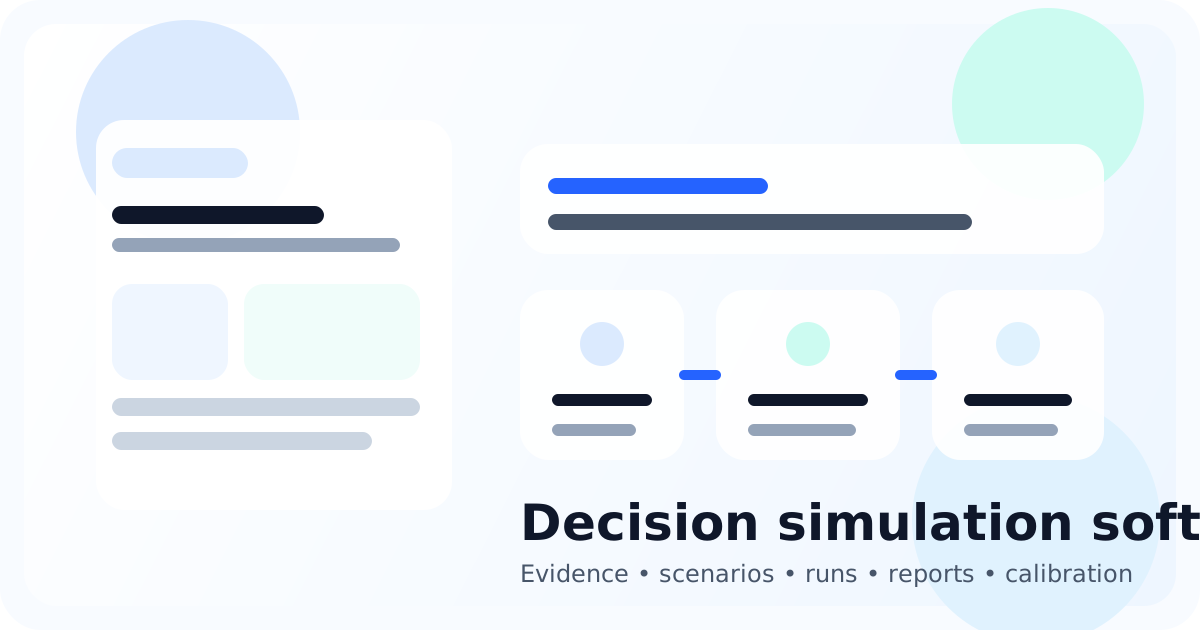
What Is Decision Simulation Software? A Practical Guide for Strategy Teams

Decision simulation software gives teams a structured way to test a high-stakes move before it reaches customers, stakeholders, or the market. The strongest products do more than generate an answer: they connect evidence, scenarios, stakeholder coverage, reports, and post-decision review in one workflow.

Focus: decision simulation software

Category guideScenario planningDecision operations
Read guide

Work through the decision before it ships.

Illustration showing a launch review with risk cards, scenarios, and a go or no-go decision path.
Before RolloutProblem-aware / Informational
Launch RiskApril 21, 20268 min readNockora Team

How to Reduce Product Launch Risk Before Spending Engineering Time

Launch risk usually starts before a product ships. It starts when teams commit engineering time to a direction that has not been pressure-tested against likely objections, segment reactions, and business downside. A stronger process catches that earlier.

Focus: reduce product launch risk before spending engineering time

Launch riskRoadmap prioritizationDecision review
Read guide
Illustration of campaign launch scenarios, customer segments, and reaction analysis cards.
Before RolloutProblem-aware / Informational
Campaign StrategyApril 21, 20268 min readNockora Team

How to Simulate Customer Reactions Before Launching a Campaign

Campaign teams usually find out whether a message works after spend is already live. A stronger process tests likely customer and stakeholder reactions before launch so the team can revise the message, segment, or rollout path before the market does the critique for them.

Focus: simulate customer reactions before launching a campaign

Campaign launchAudience reactionDecision memo
Read guide
Illustration showing pricing scenarios, stakeholders, forecast ranges, and a decision checkpoint.
Before RolloutProblem-aware / Informational
Pricing StrategyApril 13, 202611 min readNockora Team

How to Test Pricing Changes Before Launch With Decision Simulation

Pricing projects fail when teams treat them like spreadsheet exercises or one-line messaging edits. A stronger approach is to test the move through evidence, scenarios, stakeholder coverage, simulation runs, reporting, and decision follow-through before the new price reaches the market.

Focus: test pricing changes before launch

Pricing analysisScenario planningForecast review
Read guide
Illustration showing launch planning with scenario cards, release timeline, and stakeholder reactions.
Before RolloutInformational / Problem-aware
Launch PlanningApril 13, 202610 min readNockora Team

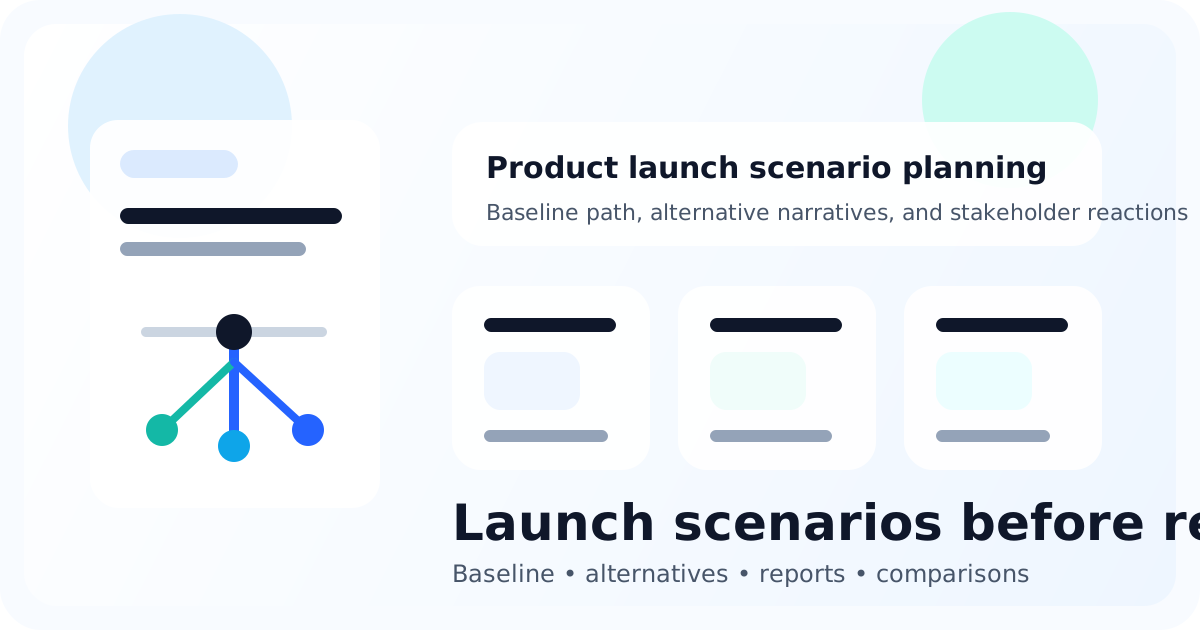
Product Launch Scenario Planning: A Practical Framework for High-Stakes Releases

Most launch plans look orderly right up until the market sees them. Scenario planning gives the team a structured way to compare baseline and alternative launch paths, pressure-test reactions, and capture the final decision with more discipline than a checklist alone.

Focus: product launch scenario planning

Launch planningScenario designCross-functional review
Read guide

Keep the decision tied to the outcome.

Illustration of a decision memo with verdict, risks, confidence, and next-step sections.
Decision OperationsSolution-aware / Informational
Decision MemoApril 21, 20268 min readNockora Team

How to Create a Boardroom-Ready Decision Memo With AI

A boardroom-ready memo is not a prettier summary. It is the artifact that turns a messy decision process into something leadership can approve, challenge, or stop. AI can help create that memo, but only if the workflow produces the right inputs first.

Focus: create a boardroom-ready decision memo with AI

Decision memoLeadership reviewReport workflow
Read guide
Illustration of revenue impact ranges, segment assumptions, and a calibration loop for a product change.
Decision OperationsProblem-aware / Solution-aware
Revenue ForecastApril 21, 20268 min readNockora Team

How to Forecast Revenue Impact Before Launching a Product Change

Most product changes are justified with directional optimism and measured later with regret. A better process estimates likely revenue impact before launch, connects that estimate to the decision memo, and keeps the forecast review tied to actual outcomes later.

Focus: forecast revenue impact before launching a product change

Revenue forecastProduct changeCommercial review
Read guide
Illustration showing a decision record connected to forecast ranges, outcomes, and a calibration summary.
Decision OperationsInformational / Problem-aware
Decision ReviewApril 13, 202611 min readNockora Team

Decision Log vs Decision Ledger: How to Keep High-Stakes Decisions Reviewable

Teams do not usually lose decisions because no one talked about them. They lose them because the final call, the reasoning behind it, and the expected outcome end up scattered across meetings, reports, and personal recollection. A decision ledger fixes that by turning one-off judgment into a reviewable operating trail.

Focus: decision log

Decision loggingForecast reviewCalibration loop
Read guide
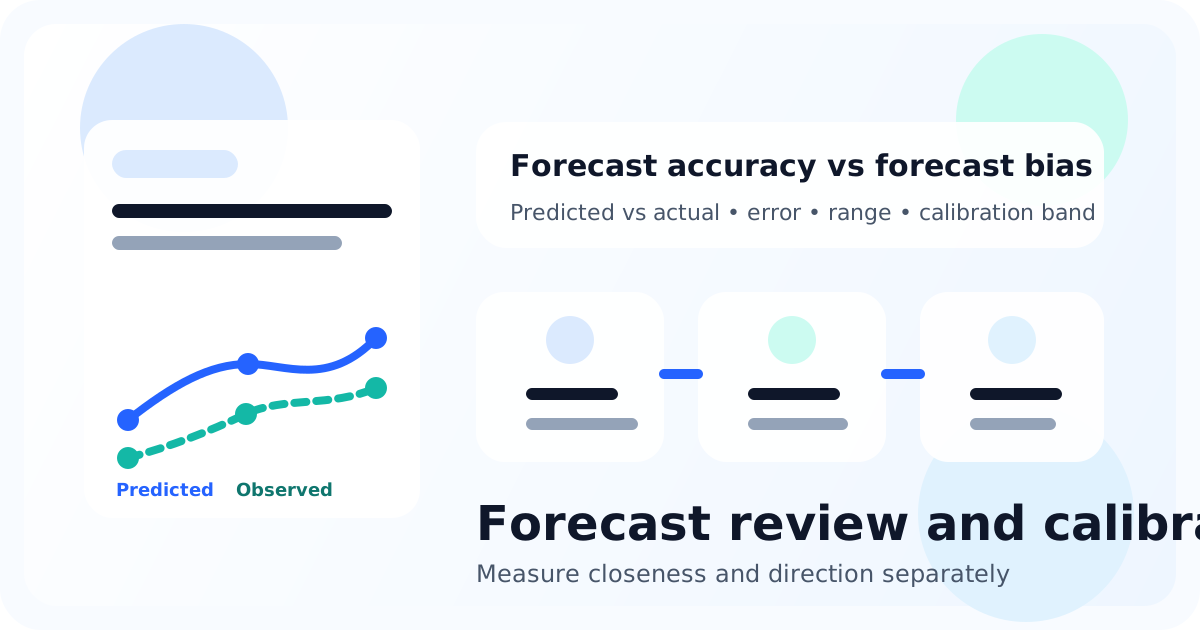
Illustration showing predicted versus actual outcomes, error metrics, and calibration bands.
Decision OperationsInformational
Forecast ReviewApril 13, 202610 min readNockora Team

Forecast Accuracy vs Forecast Bias: What Teams Should Measure After a Launch

Forecast accuracy and forecast bias are related, but they are not the same thing. Accuracy asks how close the prediction was to reality. Bias asks whether the team tends to lean too high or too low over time. If you treat those as the same metric, your post-launch review stays blurry.

Focus: forecast accuracy vs forecast bias

Forecast reviewCalibrationDecision quality
Read guide