Feature StrategyApril 21, 20269 min readNockora Team

How to Predict if a New Feature Will Succeed Before Launch

Teams usually ask whether a feature will succeed when they are already emotionally attached to shipping it. A better approach is to turn the question into a decision workflow: define the feature decision, identify who could reject it, inspect likely upside and downside, and write the memo before engineering time is fully committed.

Feature launchDecision workflowRisk review
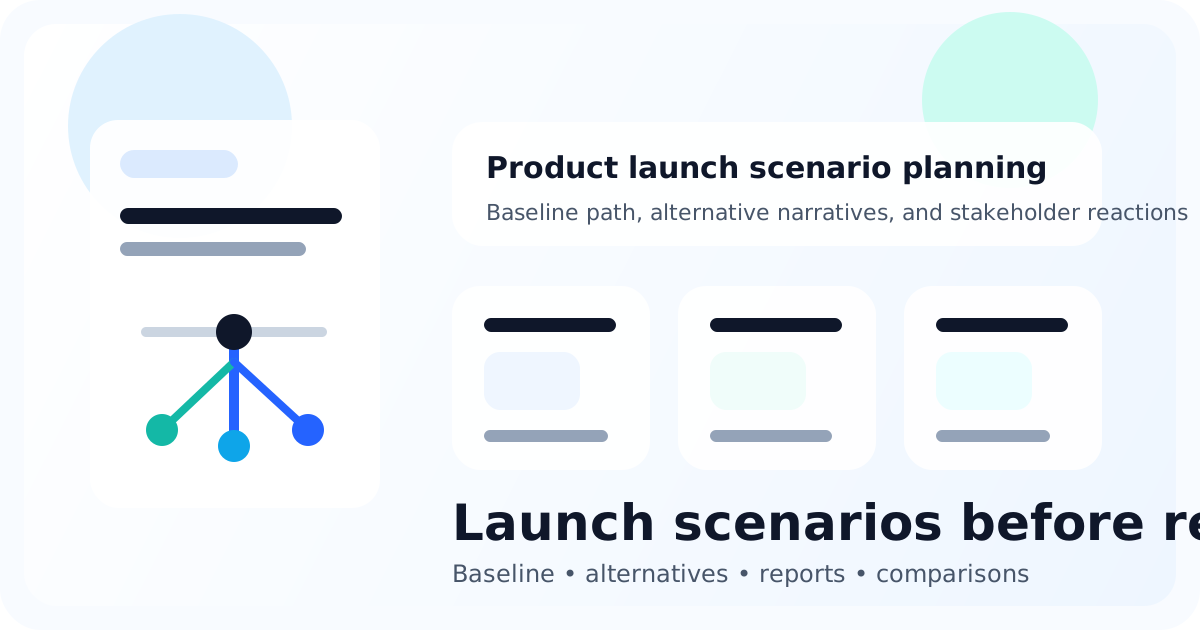
Illustration of a product team reviewing feature risks, customer reactions, and decision output before launch.

Quick answer

To predict if a new feature will succeed before launch, do not ask for a yes-or-no guess. Define the exact feature decision, the target segment, the success threshold, the likely objections, and the downside path if adoption is weak. Then run the decision through a repeatable workflow with stakeholder reactions, risk review, and memo output. Nockora's verified surface already supports decision intake, report generation, report chat, forecast, and decision review.

Why this matters

A feature rarely fails because the team forgot to build it. It fails because the team shipped the wrong version, aimed it at the wrong segment, or treated enthusiasm from inside the company as proof of market demand. By the time the product is live, the cost of being wrong is already tied to roadmap time, customer trust, and the leadership story around why the work mattered.

That is why the better question is not "Will this feature succeed?" The better question is "What decision are we making, what could go wrong, which customers may reject it, and what would justify moving forward anyway?" Once the problem is framed that way, the team can review the feature like a business decision instead of a product wish list.

TL;DR

  • Feature prediction is really decision review under uncertainty, not fortune telling.
  • The strongest pre-launch workflow defines the feature decision, segment, rejection risk, expected upside, and stop conditions before the build is fully committed.
  • A useful system should connect stakeholder reactions, risk review, memo output, and next actions instead of stopping at one assistant answer.
  • If the team is still deciding whether the idea deserves engineering time, pair this guide with reduce product launch risk before engineering builds.

Stop asking whether the feature will succeed in the abstract

A feature decision only becomes useful when it is specific

Success means different things to different people. Product may mean activation. Sales may mean a stronger close narrative. Leadership may mean paid conversion or retention. Support may mean fewer tickets, not more. If the team asks whether a feature will succeed without defining the business outcome first, it is not evaluating the decision. It is only collecting opinions.

Start by writing the decision as a move the company might actually make: launch the feature to one segment, stage it behind a higher plan, gate it to a beta group, or hold it entirely until evidence is stronger. That framing is what allows a simulation or review workflow to produce a verdict instead of a generic brainstorm.

Define the feature decision, not just the feature idea

A build request is not the same thing as a decision statement

  1. Write the exact feature or workflow change under review.
  2. Name the segment that matters most for the decision.
  3. State what would count as a positive business result and what would count as failure.
  4. Decide what the team is choosing between: full launch, staged rollout, narrower scope, or no launch.

This matters because feature work usually contains hidden decisions. Are you validating willingness to use the feature? Willingness to pay? Confidence to market it? Risk of confusing the existing workflow? Those are different problems, and they create different outputs. If the team does not separate them, the review gets muddy fast.

Identify who could reject the feature first

Rejection rarely arrives as one clean number

A feature can look promising in aggregate while still failing for the group that matters most. Power users may hate added friction. New users may ignore the feature entirely. Finance buyers may see no ROI. Customer success may anticipate more implementation work than the product team expects. That is why segment and stakeholder reaction matters before the launch plan is locked.

In a decision workflow, the team should write down which segments might reject the feature and why. That forces the review to move past general product excitement. Nockora's verified product surface already includes personas, stakeholder packs, simulation runs, and a decision snapshot layer on the predict workflow, which is much closer to the real decision than a single chat response.

Why ChatGPT alone is not enough for this decision

Brainstorming is useful, but structure is what the business needs

ChatGPT can help a team list objections, suggest success metrics, or draft a positioning statement. That is useful. The problem is that a feature launch decision usually needs more than one answer window. The team needs a repeatable place to frame the decision, review stakeholder reactions, challenge the findings, generate a memo, and keep a record of why leadership decided to ship or hold.

That is the workflow gap Nockora is trying to fill. The verified app already has predict intake, simulation runs, reports, report chat, compare routes, forecast, and a decision ledger. That is why the homepage now positions the product as decision intelligence rather than generic AI insight software.

Review upside and downside before engineering time is locked

The job is to reduce wrong turns, not to promise certainty

A serious pre-launch review should produce more than encouragement. It should show the likely upside if the feature works, the downside if the rollout underperforms, the groups most likely to resist, and the confidence level behind the current read. That is what helps leadership decide whether to push forward, narrow scope, or delay the launch.

  • Expected upside: adoption lift, conversion improvement, retention support, or strategic differentiation.
  • Expected downside: workflow friction, support burden, customer confusion, weak willingness to pay, or narrative mismatch.
  • Decision confidence: how strong the evidence and segment coverage feel right now.
  • Next step: launch, stage, revise, or stop.

Use the feature review to create a boardroom-ready memo

The memo is the bridge between product debate and leadership action

Once the team has a clearer read, the output needs to become decision-ready. That means a short verdict, top risks, key segment reactions, expected upside and downside, and a recommended next step. In Nockora, the verified report and decision memo surface is what turns a simulation result into a leadership artifact instead of an internal chat thread.

This is especially important when product is asking for engineering time or go-to-market support. Leadership rarely wants the full raw debate. It wants a traceable summary of why the team thinks the feature deserves investment and what could still break it.

Business example: onboarding analytics for self-serve accounts

A concrete example makes the workflow easier to see

Imagine a SaaS company considering an onboarding analytics feature for self-serve accounts. The product team believes it will improve activation. Sales thinks it is irrelevant for enterprise. Success worries it will increase support questions. Leadership wants to know whether the feature is a premium differentiator or just nice-to-have polish.

A better decision review would not ask whether onboarding analytics is a good idea. It would ask whether the company should launch it to self-serve accounts now, whether it should gate it to higher-intent users first, or whether it should hold until onboarding friction elsewhere is fixed. That distinction is what allows the simulation, report, and memo to produce an actionable answer.

Actionable checklist before the feature goes live

Use this as a pre-launch review frame

  1. Write the exact feature decision, not just the build request.
  2. Define the segment and business threshold that matter most.
  3. List the top three reasons customers may reject or ignore the feature.
  4. Review likely upside and downside before approving the work.
  5. Generate a memo that leadership can sign off on.
  6. If commercial impact matters, connect the output to forecast and later decision review.

Conclusion: predict the decision quality, not the future with certainty

The practical goal is fewer blind spots before launch

No product team can predict feature success with certainty before launch. What it can do is run a better pre-commitment decision process. That means naming the decision, reviewing who might reject it, estimating upside and downside, and forcing the team to write the memo before the build is fully justified by momentum alone.

If your team needs to decide whether the feature deserves engineering time at all, continue with How to Reduce Product Launch Risk Before Engineering Builds. If the next question is commercial impact, go to How to Forecast Revenue Impact Before a Product Change.

Frequently asked questions

Can you predict feature success before launch with certainty?

No. The better goal is to pressure-test the decision before launch by reviewing likely objections, segment reactions, downside paths, and expected business impact.

What should a pre-launch feature review include?

It should include the exact feature decision, target segment, success threshold, top risks, expected upside and downside, and a clear next-step recommendation.

Why is stakeholder reaction important before feature launch?

Because the wrong segment may reject the feature first, and that rejection can matter more than a broad average response if it affects adoption, willingness to pay, or support burden.

Can Nockora generate a decision memo for feature launch review?

Yes. The verified app includes report generation and a decision memo panel, which is why the feature-review workflow can end in a leadership-ready artifact instead of only a chat summary.

Run the feature decision before the feature rollout.

Use Nockora to turn one feature question into a decision snapshot, memo path, and follow-through workflow before engineering time is fully committed.

Keep going with the next workflow step.

Illustration showing a launch review with risk cards, scenarios, and a go or no-go decision path.
Before RolloutProblem-aware / Informational
Launch RiskApril 21, 20268 min readNockora Team

How to Reduce Product Launch Risk Before Spending Engineering Time

Launch risk usually starts before a product ships. It starts when teams commit engineering time to a direction that has not been pressure-tested against likely objections, segment reactions, and business downside. A stronger process catches that earlier.

Focus: reduce product launch risk before spending engineering time

Launch riskRoadmap prioritizationDecision review
Read guide
Illustration comparing generic chatbot output with a structured business decision workflow.
FoundationsComparison / Solution-aware
AI Decision WorkflowApril 21, 20268 min readNockora Team

Why ChatGPT Is Not Enough for High-Stakes Business Decisions

ChatGPT is useful for brainstorming, synthesis, and drafting. The problem is that high-stakes business decisions need more than fluent output. They need structure: a repeatable workflow, segment reactions, risk framing, memo output, comparison, and project decision context. That is the gap a decision intelligence product is trying to close.

Focus: why ChatGPT is not enough for high-stakes business decisions

ChatGPT comparisonDecision workflowSaaS positioning
Read guide
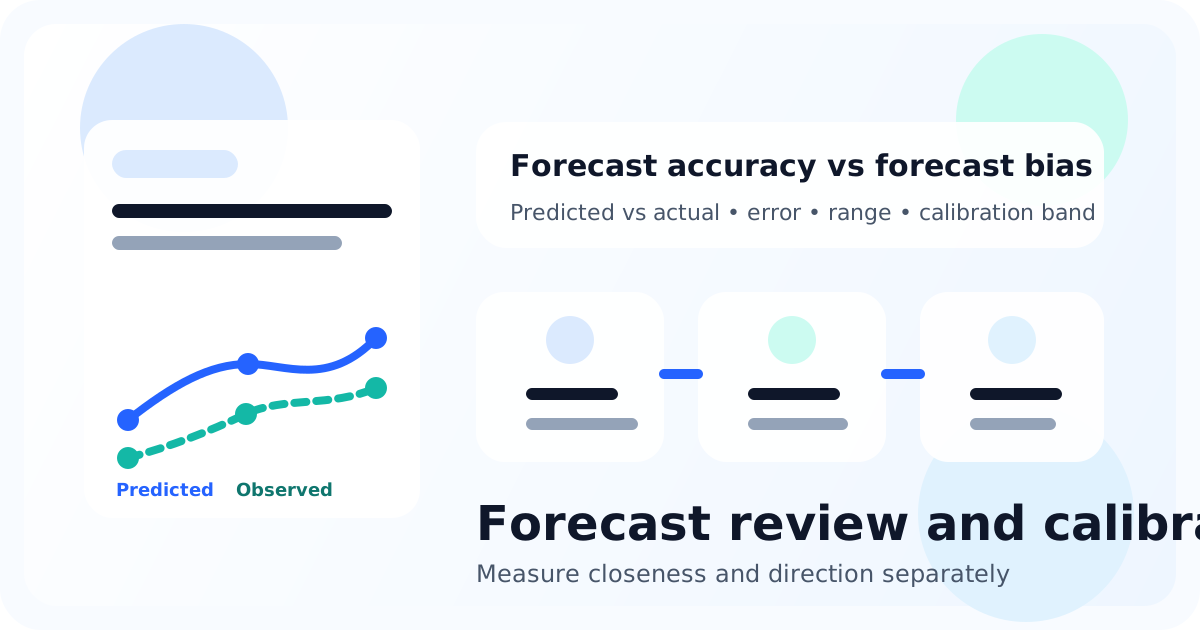
Illustration of revenue impact ranges, segment assumptions, and a calibration loop for a product change.
Decision OperationsProblem-aware / Solution-aware
Revenue ForecastApril 21, 20268 min readNockora Team

How to Forecast Revenue Impact Before Launching a Product Change

Most product changes are justified with directional optimism and measured later with regret. A better process estimates likely revenue impact before launch, connects that estimate to the decision memo, and keeps the forecast review tied to actual outcomes later.

Focus: forecast revenue impact before launching a product change

Revenue forecastProduct changeCommercial review
Read guide

Article details

Focus keyword
how to predict if a new feature will succeed before launch
Search intent
Problem-aware / Informational
Secondary keywords
predict feature success before launch, feature launch risk analysis, test a feature idea before building
Published
April 21, 2026
Updated
April 21, 2026
Reading time
9 min read
Verified scope
Evidence, scenarios, personas, runs, reports, forecast, decisions, and calibration.