AI Decision WorkflowApril 21, 20268 min readNockora Team

Why ChatGPT Is Not Enough for High-Stakes Business Decisions

ChatGPT is useful for brainstorming, synthesis, and drafting. The problem is that high-stakes business decisions need more than fluent output. They need structure: a repeatable workflow, segment reactions, risk framing, memo output, comparison, and project decision context. That is the gap a decision intelligence product is trying to close.

ChatGPT comparisonDecision workflowSaaS positioning
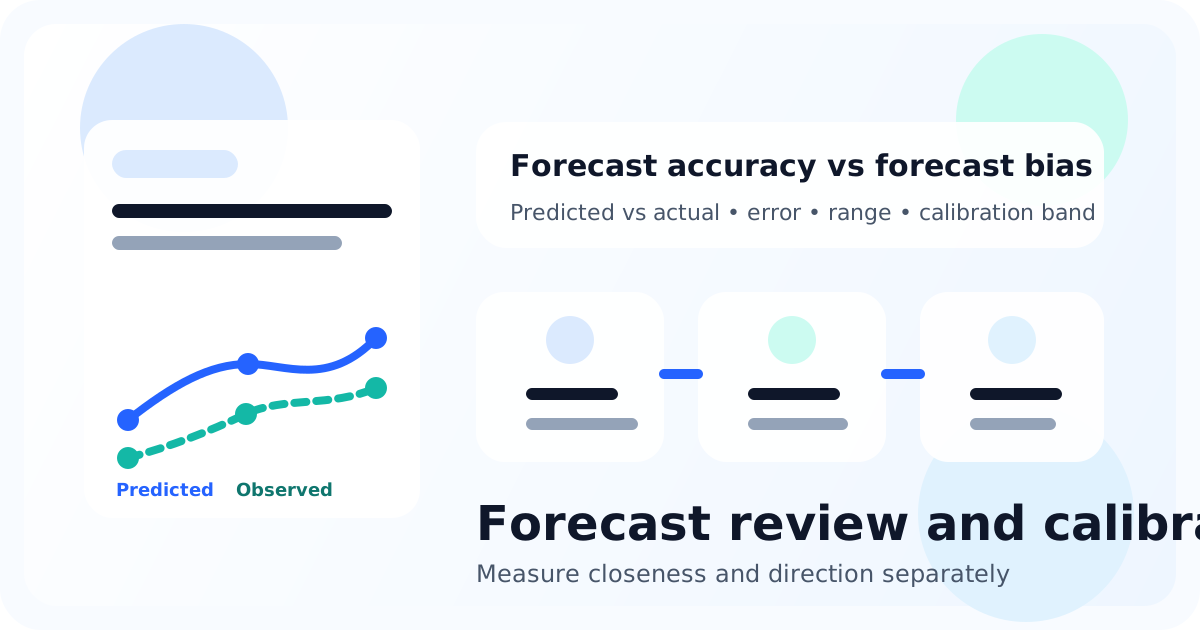
Illustration comparing generic chatbot output with a structured business decision workflow.

Quick answer

ChatGPT is not enough for high-stakes business decisions when the team needs more than a smart answer. It helps with brainstorming and synthesis, but it does not automatically give you a repeatable workflow, stakeholder simulation, risk scoring, decision memo, scenario comparison, outcome tracking, or calibration loop. That is why Nockora is better positioned as the workflow layer around models instead of a generic AI chat wrapper.

Why this matters

This comparison is easy to get wrong because ChatGPT is genuinely useful. It can draft faster than most teams, surface ideas quickly, and make a rough decision conversation feel more concrete. That is valuable. The mistake is assuming those strengths are enough for a business decision that carries real budget, engineering, or reputation risk.

Once the stakes are high, a company usually needs more than one answer window. It needs a process. It needs a way to define the decision, review segment reactions, compare alternatives, produce a memo leadership can scan, and revisit the call later when actual outcomes are visible. That is where the difference between a model and a decision workflow becomes meaningful.

TL;DR

  • ChatGPT is strong for brainstorming and synthesis, but not automatically for repeatable decision operations.
  • High-stakes business decisions need structure around the model: workflow, comparison, memo output, and project decision context.
  • The strongest positioning is not anti-ChatGPT. It is that Nockora is the workflow layer around models.
  • If you want the operating framework, continue with How to Evaluate a Business Decision With AI Before Committing Budget.

Where ChatGPT is genuinely useful

Start from the truth instead of a strawman

ChatGPT is very good at accelerating the early part of thought work. It can help a team outline a problem, surface counterarguments, suggest positioning angles, rewrite a memo, or summarize a complicated situation quickly. Those benefits are real, and any honest comparison should acknowledge them first.

If the decision is low stakes, the model may be enough. A team can use it to brainstorm and then move on. The trouble begins when the cost of being wrong rises. That is when the missing workflow becomes more important than the quality of the first answer.

What breaks when the decision is high stakes

Fluent output can hide weak process

A high-stakes decision usually requires more than a polished recommendation. The team needs a clear decision statement, scenario comparison, audience or stakeholder reaction review, top risks, confidence framing, and a record of why leadership decided what it decided. Generic chat does not automatically preserve that structure.

That gap matters because fluency can create false confidence. A team may feel the decision has been evaluated simply because the answer sounds persuasive. But if no one has reviewed segment rejection risk, downside thresholds, or what the memo should say to leadership, the process is still weak.

Normal LLMs brainstorm. Decision systems operationalize.

This is the real product distinction

The simplest honest positioning is this: normal LLMs help teams brainstorm; a decision intelligence workflow helps teams operate. That operating layer includes the brief, stakeholder reactions, risk framing, report generation, memo output, scenario comparison, and follow-through after the recommendation exists.

That is why the public site now positions Nockora as a serious B2B decision intelligence SaaS rather than a generic simulation demo. The real verified routes in the app already include predict intake, project decision rooms, simulation runs, reports, report chat, report comparison, forecast, decision ledger, and calibration surfaces. That is a workflow claim, not a model claim.

What a dedicated decision workflow adds around the model

The surrounding system is the value

  • A repeatable place to frame the decision before analysis starts.
  • Stakeholder and segment reaction review instead of one generic audience.
  • Risk, confidence, and downside framing that leadership can challenge.
  • A report and memo surface for formal decision review.
  • Scenario comparison when the team is choosing between several paths.
  • Decision history, forecast, and calibration where the business needs follow-through.

That list is why buyers comparing ChatGPT to a decision intelligence product should focus on workflow continuity instead of model IQ. The question is not whether ChatGPT can produce a plausible answer. It can. The question is whether the team can operate the full decision process there without losing structure.

Business example: should we change pricing next quarter?

A classic case where generic chat is not enough

Imagine a SaaS company deciding whether to change pricing next quarter. ChatGPT can propose pros and cons. That is helpful. But the business still needs to know which customer segment may reject the move, what the downside looks like, whether a staged path is safer than a broad rollout, and what leadership should do next if the signals are mixed.

That decision also needs a memo, not just an answer. Someone has to write what is being recommended, why, how strong the confidence is, and what could still fail. That is exactly the point where a workflow product becomes more useful than a general chat window.

Why the memo matters more than the answer

Leadership review requires traceable reasoning

A business decision usually becomes real when it is written down for leadership. The memo is where the team commits to a recommendation, top risks, assumptions, and next step. If the workflow cannot naturally produce that output, it pushes the most important part of the process back into ad hoc documents and meetings.

Nockora's verified report and decision memo surfaces matter because they keep the reasoning close to the simulation and decision review itself. That is a stronger enterprise story than saying the product is simply another place to chat with a model.

Use ChatGPT and a decision workflow together, not as enemies

The smart position is complementary

The strongest positioning is not that teams should stop using ChatGPT. They should keep using it for what it does well: brainstorming, summarizing, drafting, and fast exploration. But when the decision is high stakes, the surrounding system matters more. That is where a decision intelligence workflow earns its place.

In other words, the model helps the team think. The workflow helps the organization decide. That distinction is both more honest and more defensible in a B2B SaaS category.

Actionable checklist when the team asks, why not just use ChatGPT?

Use this in real buying conversations

  1. Acknowledge where ChatGPT is useful.
  2. Ask whether the decision needs repeatability, not just a smart answer.
  3. Ask whether leadership needs a memo or formal review artifact.
  4. Ask whether the team needs scenario comparison or decision history.
  5. Ask whether the business wants to track outcomes and calibrate later.
  6. If the answer is yes to those questions, the workflow layer matters.

Conclusion: the model is not the full product

The workflow is where B2B value compounds

ChatGPT is enough for many lightweight tasks. It is not automatically enough for a pricing decision, launch decision, budget decision, or leadership decision that the company may revisit later. Those problems need structure around the model.

If you want the practical operating framework, continue with How to Evaluate a Business Decision With AI Before Committing Budget. If the next need is a leadership artifact, read How to Create a Boardroom-Ready Decision Memo With AI.

Frequently asked questions

Is ChatGPT useful for business decisions at all?

Yes. It is useful for brainstorming, summarizing, and exploring options. The limitation appears when the team needs repeatable workflow, comparison, memo output, and project decision context.

What does a decision intelligence workflow add beyond a chatbot?

It adds structure around the model: decision framing, stakeholder review, risk and confidence framing, memo output, comparison, and follow-through after the recommendation exists.

Is Nockora replacing ChatGPT?

No. The stronger position is that Nockora is the workflow layer around models for higher-stakes decisions.

Why does the memo matter so much?

Because leadership usually approves a decision through a written recommendation, not through a chat transcript. The memo is where the reasoning becomes reviewable.

Keep the model. Upgrade the workflow.

Use Nockora when the team needs a repeatable decision process with memo output, comparison, and a trackable decision trail around the model.

Keep going with the next workflow step.

Illustration of an AI-assisted decision workflow moving from business question to risk map and memo.
FoundationsSolution-aware / Informational
Decision IntelligenceApril 21, 20268 min readNockora Team

How to Evaluate a Business Decision With AI Before Committing Budget

AI is useful for evaluating a business decision only when it improves the workflow, not when it produces more fluent opinions. A serious process frames the decision, pressure-tests likely reactions, reviews risk and impact, and creates a memo before the budget is locked.

Focus: evaluate a business decision with AI before committing budget

Budget decisionsAI workflowDecision memo
Read guide
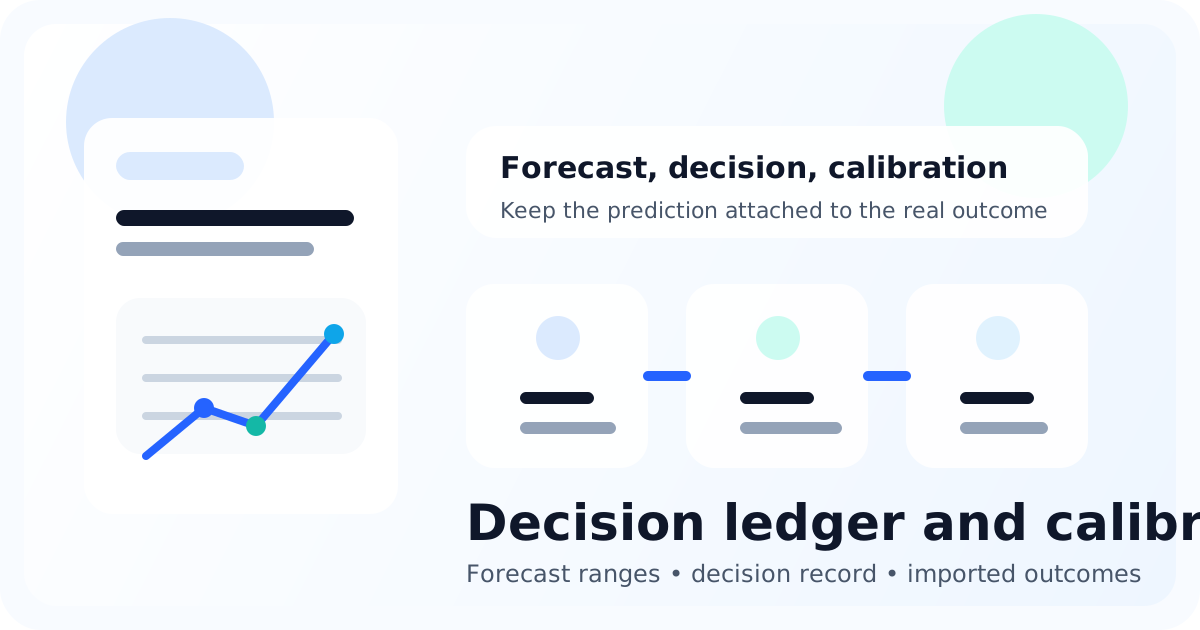
Illustration of a decision memo with verdict, risks, confidence, and next-step sections.
Decision OperationsSolution-aware / Informational
Decision MemoApril 21, 20268 min readNockora Team

How to Create a Boardroom-Ready Decision Memo With AI

A boardroom-ready memo is not a prettier summary. It is the artifact that turns a messy decision process into something leadership can approve, challenge, or stop. AI can help create that memo, but only if the workflow produces the right inputs first.

Focus: create a boardroom-ready decision memo with AI

Decision memoLeadership reviewReport workflow
Read guide
Illustration of revenue impact ranges, segment assumptions, and a calibration loop for a product change.
Decision OperationsProblem-aware / Solution-aware
Revenue ForecastApril 21, 20268 min readNockora Team

How to Forecast Revenue Impact Before Launching a Product Change

Most product changes are justified with directional optimism and measured later with regret. A better process estimates likely revenue impact before launch, connects that estimate to the decision memo, and keeps the forecast review tied to actual outcomes later.

Focus: forecast revenue impact before launching a product change

Revenue forecastProduct changeCommercial review
Read guide

Article details

Focus keyword
why ChatGPT is not enough for high-stakes business decisions
Search intent
Comparison / Solution-aware
Secondary keywords
chatgpt vs decision intelligence, chatgpt for business decisions, why generic ai is not enough for strategy decisions
Published
April 21, 2026
Updated
April 21, 2026
Reading time
8 min read
Verified scope
Evidence, scenarios, personas, runs, reports, forecast, decisions, and calibration.