Campaign StrategyApril 21, 20268 min readNockora Team

How to Simulate Customer Reactions Before Launching a Campaign

Campaign teams usually find out whether a message works after spend is already live. A stronger process tests likely customer and stakeholder reactions before launch so the team can revise the message, segment, or rollout path before the market does the critique for them.

Campaign launchAudience reactionDecision memo
Illustration of campaign launch scenarios, customer segments, and reaction analysis cards.

Quick answer

To simulate customer reactions before launching a campaign, define the exact message and audience, identify the rejection risks, compare rollout scenarios, and review likely objections before ad spend or brand exposure goes live. In Nockora's verified surface, that fits naturally into predict intake, runs, reports, report chat, comparison, and downstream memo workflows.

Why this matters

Campaign teams are often forced to act quickly. That speed creates a habit of treating launch day as the first real test. If the campaign misses, the team then explains the result in hindsight. That is expensive when the spend is large, the audience is sensitive, or the message affects leadership credibility.

A better process moves the review earlier. Before launch, the team should know what message is being tested, which audience matters most, where rejection might come from, and what downside would make the campaign not worth running. Once the question is framed that way, a campaign becomes a business decision, not just creative output.

TL;DR

  • Campaign review gets better when the team simulates reactions before ad spend is committed.
  • The right workflow tests audience reaction, downside paths, and message risk rather than only drafting better copy.
  • A useful output includes verdict, top risks, segment reactions, and a memo leadership can review before launch.
  • If the decision is not only the campaign but also the broader spend, continue with How to Evaluate a Business Decision With AI Before Committing Budget.

Treat the campaign like a business decision, not just a creative asset

A campaign creates spend risk, brand risk, and leadership risk at once

A campaign is rarely only a messaging project. It also commits budget, shapes audience perception, and creates internal expectations about pipeline or launch performance. That is why campaign review should not stop at copy feedback. The team needs a more explicit decision review before launch.

The goal is not to predict exact customer behavior. The goal is to identify likely objections, rejection pockets, and downside paths before the campaign becomes your first public experiment.

Define the audience and business threshold first

Campaign reaction means little without a clear success threshold

  1. Write the exact campaign message or angle being tested.
  2. Name the primary audience segment.
  3. Define what would count as success for the business, not just for creative feedback.
  4. State what kind of rejection would make the campaign too risky to launch.

This matters because many campaigns sound strong in the abstract. The problem appears when the audience, spend level, or business objective becomes concrete. Without that context, campaign review collapses into opinion trading.

Map likely objections before you optimize the wording

The biggest problem is often interpretation, not grammar

Teams often spend too much time perfecting copy before they pressure-test what the message implies. Does the campaign overpromise? Does it sound out of touch for the target segment? Will existing customers interpret it differently from prospects? These are the kinds of risks that matter before spend is committed.

A simulation workflow helps because it forces the campaign team to think in reactions and objections. That is a better pre-launch lens than simply asking whether the message sounds good in a review room.

Why ChatGPT alone is not enough for campaign launch review

A good brainstorm is not the same thing as a launch decision

ChatGPT can suggest hooks, rewrites, or audience angles quickly. That is helpful. But a campaign decision often requires more than generated options. The team needs a place to frame the decision, compare scenarios, record the likely downside, and create a memo that leadership can challenge before launch.

Nockora is better framed as the workflow layer around models. The verified app includes predict intake, runs, report generation, report chat, comparison, forecast, and decision review paths. That is what makes the campaign review repeatable instead of one more isolated AI conversation.

Compare campaign scenarios before launch

Message, audience, and rollout path all deserve comparison

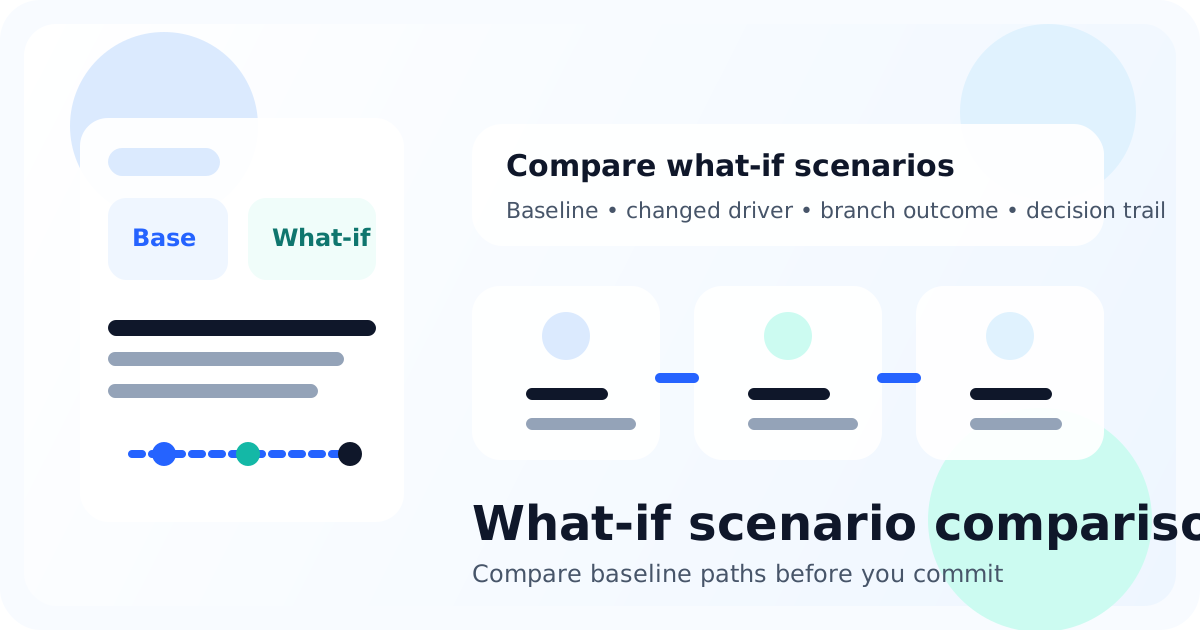
The campaign team should compare at least two realistic scenarios. That could mean one message for enterprise and another for SMB, one channel sequence versus another, or a narrower launch against a broader one. Scenario comparison matters because the best message often depends on who sees it first and what business objective is attached to it.

In the current Nockora codebase, scenario and compare surfaces already exist. That is why this blog targets the decision problem directly instead of pretending the product is only a writing assistant.

Use the campaign review to write the leadership memo

Leadership usually wants the decision, not the whole brainstorm

A useful campaign memo should answer five things clearly: what message is being launched, which audience is most important, what upside the team expects, what downside could still break the campaign, and what the next step should be. That is the output that makes the campaign review useful across product, growth, and leadership.

Because Nockora already supports report and decision memo workflows, the public copy can now responsibly position memo output as a real artifact rather than a future-state promise.

Business example: enterprise security campaign with brand-risk downside

A campaign can be strategically correct and still poorly timed

Imagine a SaaS company planning an enterprise security campaign. The sales team wants urgency. Marketing wants a sharper hook. Product worries the message oversells current security coverage. Leadership wants enterprise credibility but does not want to trigger objections from existing customers who read the campaign differently.

A good pre-launch review would compare at least two message paths, identify the audience most likely to reject the current framing, and decide whether the campaign should launch broadly, segment-first, or later. That is a better operating question than whether the copy sounds impressive.

Actionable checklist before campaign spend goes live

Use this to catch message risk earlier

  1. Write the exact campaign message and the target audience.
  2. Define the business threshold for success and the downside that would make the launch a mistake.
  3. List the most likely objections or negative interpretations.
  4. Compare at least two realistic campaign scenarios.
  5. Create a memo with verdict, risks, and next step before spend is committed.
  6. If the campaign is tied to a larger spend decision, connect the review to budget evaluation.

Conclusion: do not let paid media become the first honest review

The market is too expensive to use as the first draft

A campaign can still miss after a strong pre-launch review. The win is not certainty. The win is catching weak positioning, segment mismatch, or avoidable downside before the spend is live and the team is explaining failure after the fact.

If your next question is broader than the campaign itself, continue with How to Evaluate a Business Decision With AI Before Committing Budget. If your next focus is why teams need more than a generic chatbot for these calls, read Why ChatGPT Is Not Enough for High-Stakes Business Decisions.

Frequently asked questions

How do you test a campaign before launch?

Define the exact message and audience, identify likely objections, compare launch scenarios, and review the downside before spend goes live.

Why simulate customer reactions before campaign launch?

Because the cost of discovering issues through live spend is high. A pre-launch reaction review can surface message risk, segment mismatch, and likely objections earlier.

What should a campaign decision memo include?

It should include the campaign decision, primary audience, expected upside, top risks, likely objections, and a clear next-step recommendation.

Is this a guarantee that a campaign will work?

No. The better claim is that it helps teams reduce avoidable blind spots before launch and improve decision quality around the campaign.

Pressure-test the campaign before the market does it for you.

Use Nockora to review message risk, segment reactions, and next-step options before launch spend and brand exposure are live.

Keep going with the next workflow step.

Illustration of an AI-assisted decision workflow moving from business question to risk map and memo.
FoundationsSolution-aware / Informational
Decision IntelligenceApril 21, 20268 min readNockora Team

How to Evaluate a Business Decision With AI Before Committing Budget

AI is useful for evaluating a business decision only when it improves the workflow, not when it produces more fluent opinions. A serious process frames the decision, pressure-tests likely reactions, reviews risk and impact, and creates a memo before the budget is locked.

Focus: evaluate a business decision with AI before committing budget

Budget decisionsAI workflowDecision memo
Read guide
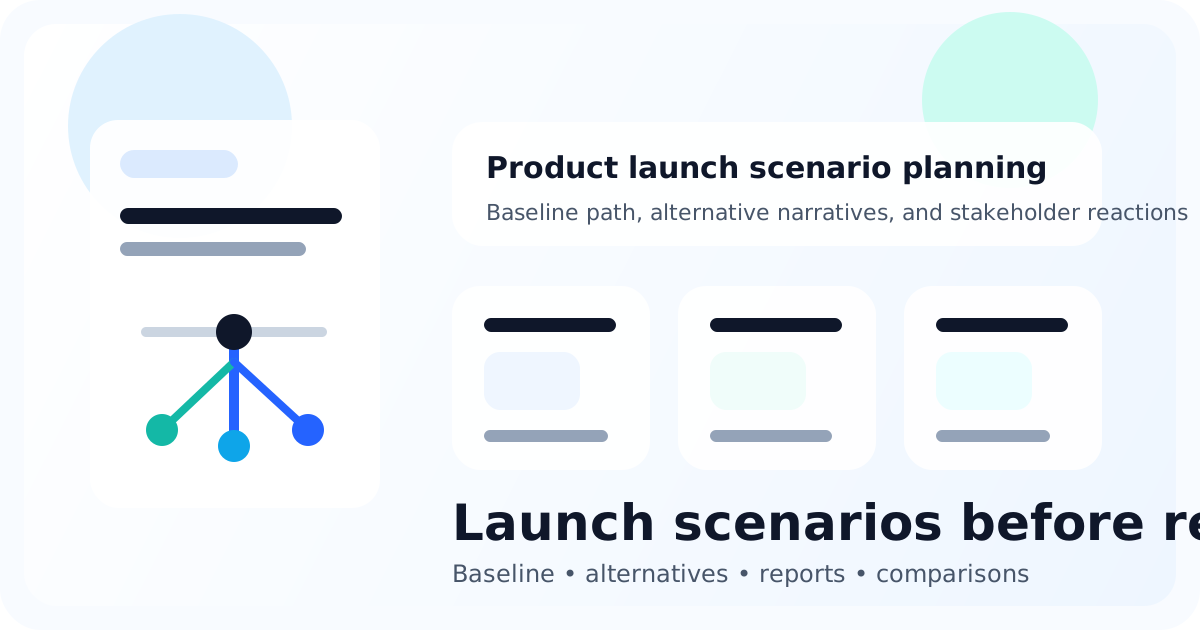
Illustration comparing generic chatbot output with a structured business decision workflow.
FoundationsComparison / Solution-aware
AI Decision WorkflowApril 21, 20268 min readNockora Team

Why ChatGPT Is Not Enough for High-Stakes Business Decisions

ChatGPT is useful for brainstorming, synthesis, and drafting. The problem is that high-stakes business decisions need more than fluent output. They need structure: a repeatable workflow, segment reactions, risk framing, memo output, comparison, and project decision context. That is the gap a decision intelligence product is trying to close.

Focus: why ChatGPT is not enough for high-stakes business decisions

ChatGPT comparisonDecision workflowSaaS positioning
Read guide
Illustration showing a launch review with risk cards, scenarios, and a go or no-go decision path.
Before RolloutProblem-aware / Informational
Launch RiskApril 21, 20268 min readNockora Team

How to Reduce Product Launch Risk Before Spending Engineering Time

Launch risk usually starts before a product ships. It starts when teams commit engineering time to a direction that has not been pressure-tested against likely objections, segment reactions, and business downside. A stronger process catches that earlier.

Focus: reduce product launch risk before spending engineering time

Launch riskRoadmap prioritizationDecision review
Read guide

Article details

Focus keyword
simulate customer reactions before launching a campaign
Search intent
Problem-aware / Informational
Secondary keywords
campaign reaction analysis, test campaign before launch, predict campaign response before launch
Published
April 21, 2026
Updated
April 21, 2026
Reading time
8 min read
Verified scope
Evidence, scenarios, personas, runs, reports, forecast, decisions, and calibration.