Launch PlanningApril 13, 202610 min readNockora Team

Product Launch Scenario Planning: A Practical Framework for High-Stakes Releases

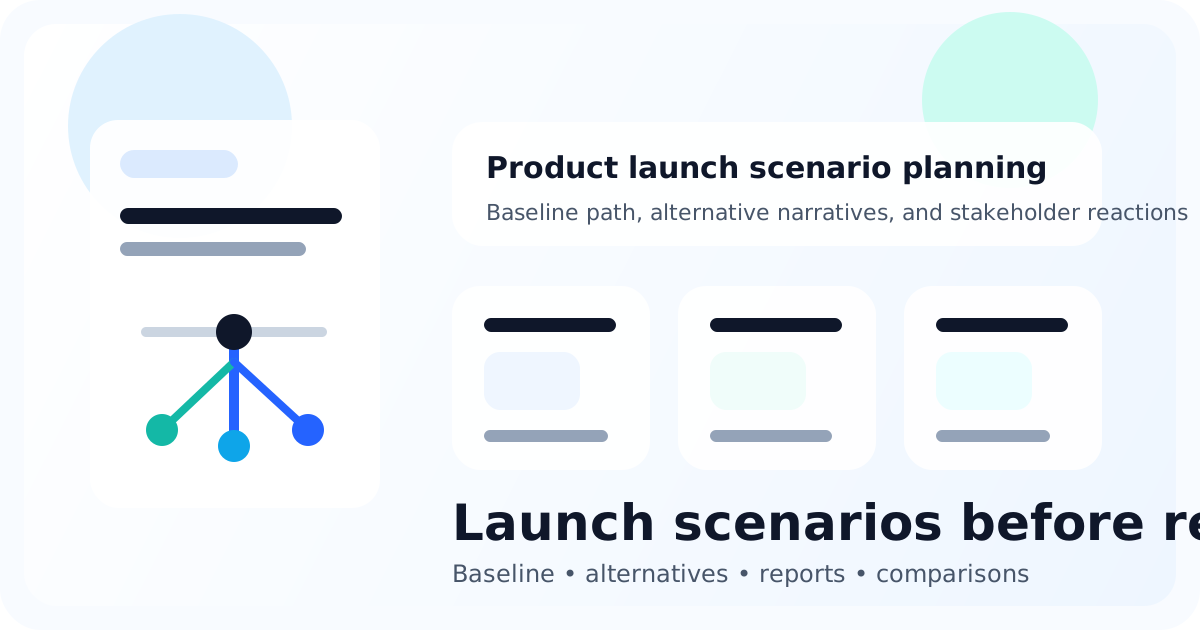
Most launch plans look orderly right up until the market sees them. Scenario planning gives the team a structured way to compare baseline and alternative launch paths, pressure-test reactions, and capture the final decision with more discipline than a checklist alone.

Launch planningScenario designCross-functional review
Illustration showing launch planning with scenario cards, release timeline, and stakeholder reactions.

Quick answer

Product launch scenario planning means defining the baseline release path, creating realistic alternatives, identifying the stakeholders and signals that matter, then comparing those scenarios before the launch goes live. In Nockora, that maps to environment setup, scenarios, personas, runs, reports, and follow-through workflows such as forecasts and decision logging.

Why this matters

A launch checklist is useful, but it does not answer the hardest question: what happens if the release lands differently than the team expects? Launches fail less often because a task was missing and more often because the team did not compare realistic paths, pressure-test the timing, or inspect how different audiences might react.

Scenario planning solves that by making the launch explicit before it is public. Instead of discussing one preferred narrative, the team can test a baseline launch path against meaningful alternatives, examine the tradeoffs, and preserve the final decision in a way that can be reviewed later.

TL;DR

  • Launch scenario planning is most valuable when the team is choosing between multiple release paths, timings, or messaging approaches.
  • The workflow should connect baseline and alternative scenarios, stakeholder coverage, simulation runs, reports, and later decision review.
  • Nockora's verified product surface already supports the core launch workflow: scenarios, personas, run comparison, reports, forecasts, and decision logging.
  • If pricing is part of the launch, pair this guide with How to Test Pricing Changes Before Launch.

Why launch plans need scenarios instead of one preferred story

A launch plan is a path, not a prediction

Most launch documents quietly assume that one path will happen: the timing holds, the positioning lands, internal teams stay aligned, and the audience reads the release the way the company intends. That is why a launch can look prepared and still go sideways. The plan is organized, but the assumptions were never put under pressure.

Scenario planning creates contrast. It forces the team to ask what changes if the release is delayed, if the message is framed differently, if one stakeholder group reacts more negatively than expected, or if the launch is paired with a pricing move. The team is no longer betting on one clean story. It is comparing plausible paths before the market chooses for it.

Start by defining the baseline launch path

A scenario set only works if the baseline is clear

Name the release, timing, and intended outcome

The baseline should describe the launch as the team currently expects it to happen. That means stating what is being launched, who the audience is, what timing the team prefers, what message anchors the release, and what signals will indicate the launch is working. Without that baseline, later comparisons are too vague to trust.

Airtable-style launch checklist content tends to focus on tasks such as personas, pricing, assets, and go-to-market setup. Those are important, but they become much more useful when they are placed inside a baseline scenario the team can compare against alternatives.

Create the launch scenarios that are actually worth comparing

More scenarios are not better if they do not change the decision

The goal is not to create an exhaustive universe of hypothetical launches. The goal is to create the few scenarios that could change the team's decision. A meaningful alternative might adjust timing, audience emphasis, message framing, channel mix, launch sequencing, or the way the product is packaged at release.

  • Baseline launch: the current preferred release path.
  • Delay scenario: the same release with a changed timeline or sequencing.
  • Narrative shift: the same product move framed around a different message.
  • Combined move: the launch paired with a pricing, packaging, or policy change.

Nockora's scenario workflow and templates make this kind of comparison practical. The key is to keep each scenario close enough to reality that the team would actually consider shipping it.

Bring the right stakeholders into the simulation

Launches succeed or fail across multiple audiences

A launch affects more than buyers. Existing customers, prospects, sales, leadership, community observers, and partner or policy stakeholders may each react differently. If the simulation only models one audience, the launch review will miss the conflicts that matter most when the release becomes public.

This is where persona generation and stakeholder packs help. They give the team a way to represent different reactions inside the same launch review. The point is not to manufacture complexity. The point is to make sure the release is being tested against the groups that can change the outcome.

Run the comparison and inspect what changed

The report should help the team choose, not just summarize

Look for changed drivers, not just changed sentiment

Once the scenarios are defined, the team can run the simulation, compare results, and review where the launch paths diverged. The most useful comparison is not just which path feels more positive. It is which variable changed the result. Did timing matter more than framing? Did a combined pricing move create most of the resistance? Did one stakeholder group shift the overall signal more than expected?

Nockora already supports branching and run comparison, which makes this step operational. Teams can examine baseline and intervention paths side by side instead of relying on memory across separate reviews.

Turn the launch review into an actual decision

A scenario exercise only matters if it changes the release plan

The team still has to choose. That means deciding which launch path to keep, what assumptions now need closer monitoring, and whether a forecast or decision record should be attached to the release. Without that step, scenario planning becomes theatre: insightful in the room but disconnected from the operating workflow.

Nockora's forecast and decision workflows matter here because they give the team a place to preserve what it expected from the launch and compare that with actual outcomes later. If you want that operating loop, continue with the decision ledger and calibration guide.

Common mistakes in product launch scenario planning

The same patterns show up repeatedly

  • Treating the checklist as the strategy instead of as support for the strategy.
  • Creating too many weak scenarios that do not change the final decision.
  • Ignoring internal stakeholder reactions and focusing only on end users.
  • Reviewing the report without turning the outcome into a decision or forecast.
  • Separating launch planning from pricing or narrative changes when the audience experiences them together.

Each of these mistakes keeps the launch plan neat while reducing its value. Good scenario planning adds useful friction before release so the team can move with more confidence later.

When launch scenario planning is worth the effort

Use the workflow where launch risk is meaningful

Not every release needs a heavy scenario workflow. The approach becomes worthwhile when the launch carries meaningful customer, revenue, narrative, or leadership risk. That includes launches tied to a new category, a major repositioning, a packaging change, a move upmarket, a public announcement likely to attract outside commentary, or a release that depends on unusually precise cross-functional sequencing.

When the release is small and easily reversible, a lighter process may be enough. But once the consequences of the launch are large enough that the team wishes it could rehearse the move first, scenario planning becomes efficient preparation rather than extra ceremony. It helps the organization challenge assumptions before the market does.

That is also why this topic is different from a generic launch checklist. Checklist content helps teams remember tasks. Scenario planning helps them compare release paths and choose a stronger one. The two can work together, but they solve different problems.

How to keep launch scenario planning lightweight enough to use

The framework should clarify the release, not delay it forever

Teams abandon launch frameworks when they become too heavy. A practical rule is to limit the work to one baseline, a small set of alternatives, the stakeholders most likely to change the outcome, and a clear question the team needs to answer before release. That preserves the value of structure without turning the review into a parallel project.

The workflow is doing its job when it sharpens the release decision rather than expanding the uncertainty endlessly. Once the team can explain which path it prefers, why that path looks stronger, and what tradeoffs remain, scenario planning has done enough to justify the effort.

Who should be in the launch scenario review

The comparison gets better when the room reflects the real launch

Launch scenario planning works best when the review includes the people who will feel the consequences of the release differently. That often means product, marketing, growth, operations, leadership, and any team responsible for the commercial or customer response once the launch is live.

The point is not to maximize meeting size. It is to make sure the comparison captures the same tradeoffs the launch will create in reality. When the room is too narrow, the review tends to miss the exact friction that shows up later in market execution.

Conclusion: a launch framework should help the team choose

Structure is only useful when it sharpens the call

A launch framework becomes meaningful when it helps the team compare real alternatives and preserve the reasoning behind the final release path. That is the difference between a launch document that looks complete and a launch workflow that actually improves the decision.

If the next decision in front of you is more about a monetization change, go to How to Test Pricing Changes Before Launch. If you need a tighter method for comparing alternatives, read How to Compare What-If Scenarios Before You Commit.

Frequently asked questions

What is product launch scenario planning?

It is the process of defining a baseline launch path, creating realistic alternatives, and comparing those scenarios before the release goes live.

How many launch scenarios should a team create?

Usually a baseline plus a small set of meaningful alternatives is enough. More scenarios only help if they could realistically change the decision.

Why is launch scenario planning better than a checklist alone?

A checklist tracks tasks. Scenario planning compares plausible release paths and helps the team inspect the tradeoffs before launch.

What should happen after the launch scenario review?

The team should choose a path, note the assumptions it is accepting, and create a forecast or decision record if post-launch review matters.

Run the launch review before the release becomes public.

Nockora gives teams a way to build scenarios, compare launch paths, inspect reports, and connect the final release choice to follow-up review.

Keep going with the next workflow step.

Illustration showing pricing scenarios, stakeholders, forecast ranges, and a decision checkpoint.
Before RolloutProblem-aware / Informational
Pricing StrategyApril 13, 202611 min readNockora Team

How to Test Pricing Changes Before Launch With Decision Simulation

Pricing projects fail when teams treat them like spreadsheet exercises or one-line messaging edits. A stronger approach is to test the move through evidence, scenarios, stakeholder coverage, simulation runs, reporting, and decision follow-through before the new price reaches the market.

Focus: test pricing changes before launch

Pricing analysisScenario planningForecast review
Read guide
Illustration showing a decision record connected to forecast ranges, outcomes, and a calibration summary.
Decision OperationsInformational / Problem-aware
Decision ReviewApril 13, 202611 min readNockora Team

Decision Log vs Decision Ledger: How to Keep High-Stakes Decisions Reviewable

Teams do not usually lose decisions because no one talked about them. They lose them because the final call, the reasoning behind it, and the expected outcome end up scattered across meetings, reports, and private memory. A decision ledger fixes that by turning one-off judgment into a reviewable operating trail.

Focus: decision log

Decision loggingForecast reviewCalibration loop
Read guide